Literacy Intervention · Grades 2–5
Literacy Intervention at
Los Altos Christian Schools
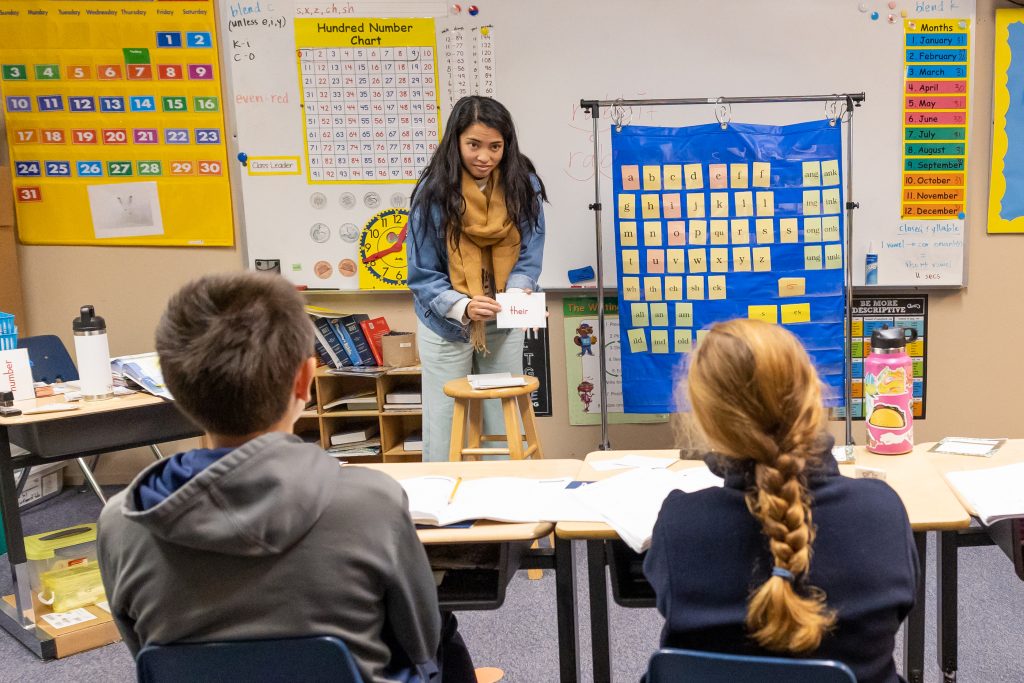
Small-group reading and spelling instruction using the Wilson Reading System, three to four times a week — inside the school day, so your child stays part of their own class.
Ask about Literacy Intervention
Tell us a little about your child and we’ll be in touch. We reply within one school day.
Prefer to talk? Call (650) 948-3738
Start with a conversation
Every child’s reading story is different. The best first step is a visit and an honest conversation about what you’re seeing at home and at school.
If it looks like a fit, a Wilson reading assessment is part of the regular admissions process.
What a visit includes
- Classrooms with students in them, during the school day
- How the pull-out fits around your child’s class schedule
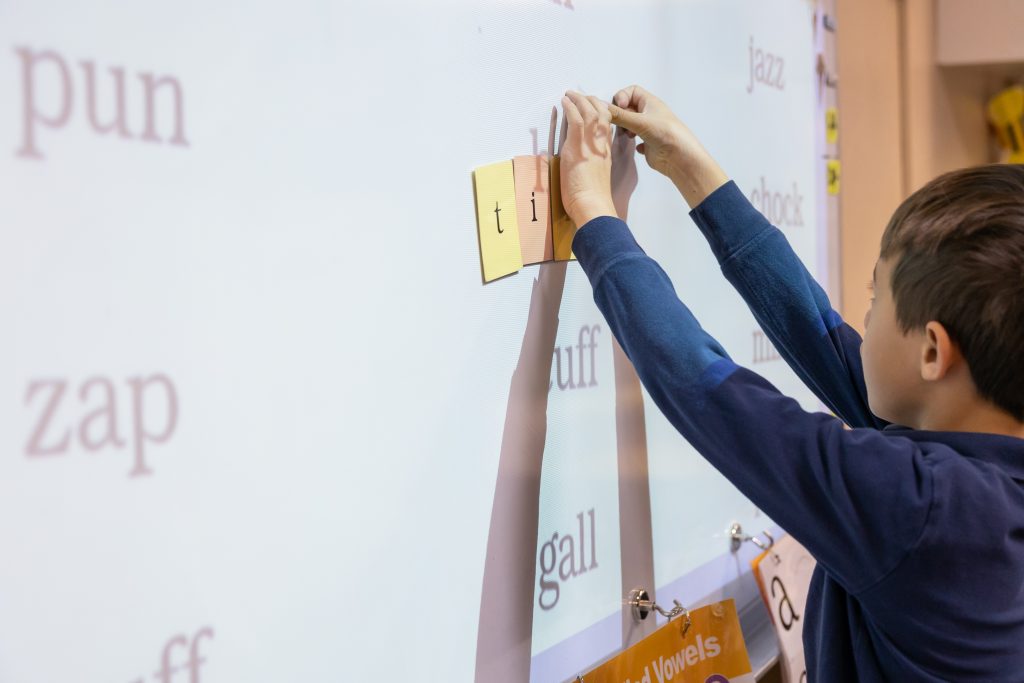
- What the Wilson Reading System looks like in practice
- A straight answer on whether the program fits your child
Most visits take about an hour.
“…the specialized help he needs in literacy without missing the regular classroom.”LACS Parent
Why families choose Literacy Intervention at LACS
01
Small groups
Students work in groups of three to six students 3–4 times per week, with teachers trained in the Wilson Reading System.
02
No make-up work
The pull-out happens while the class works on similar concepts. No missed content, and no make-up work.
03
Built on the science of reading
Wilson is a structured, multisensory program with Orton-Gillingham roots — reading and spelling taught explicitly, sound by sound.
04
Progress you can see
Students are assessed at the end of each Wilson step, and progress goes straight to parents.
From the Head of Schools
The right help, in the right setting
Literacy Intervention is for a capable child who is working harder than they should have to at reading and spelling.
A child needs to be able to work independently in a general education setting, and the gap to grade level can’t be much more than three to four months. When it’s the right match, the progress is real.
Come see it while class is in session, and bring your questions.
Head of Schools, Los Altos Christian School
Is Literacy Intervention the right fit?
A strong fit
Students in grades 2–5 with a specific learning difference such as dyslexia, who are no more than about three to four months behind their peers in reading and spelling, and who can work independently in a general education classroom.
Not what we’re set up for
Students who need one-on-one instruction or aide support, intensive therapeutic programs, or specialized social, emotional or behavioral services.
IEPs and 504 plans
We’re glad to consider an existing IEP, 504 plan or neuropsychological evaluation and honor it where we can. As a private school, we may not provide every accommodation a public-school plan specifies.

Aligned with the science of reading
The science of reading is a large body of research on how the brain learns to read. It shows that reading has to be taught explicitly and systematically — phonemic awareness, phonics, fluency, vocabulary and comprehension — rather than picked up by guessing words from pictures or context.
That is how the Wilson Reading System works. Students learn to decode and spell through direct, structured instruction, step by step, which is exactly what research shows students with dyslexia need.
Inside the program


Come see it on a school day
Tours run most weekday mornings, while classes are in session. Admissions open October 1.
Questions parents ask
Does my child need a dyslexia diagnosis?
No. A formal diagnosis isn’t required. Fit is determined by a Wilson reading assessment as part of the regular admissions process.
What is the Wilson Reading System?
A structured, multisensory reading and spelling program built on the Orton-Gillingham approach and grounded in the science of reading. It is the core of our program, taught by teachers trained in the Wilson method.
Will my child fall behind in other subjects?
No. The pull-out happens during a block where the class is working on similar reading and spelling skills the program covers, so students aren’t missing new core material and there’s no make-up work.
How big are the groups, and how long are sessions?
Groups of three to six students, for about fifty minutes, three to four times per week. Groups are organized by where each student is in the program, not strictly by grade.
What grades does the program serve?
Grades 2 through 5.
How long do students stay in the program?
It varies — from about half a year to two or three years. Benchmark assessments track progress, and once a student is at or near grade level, they graduate out.
How is this different from a private tutor?
It’s in school, during the school day, and coordinated with your child’s classroom — no extra commute, no after-school sessions, and no separation from their school community.
Is there a cost beyond tuition?
Yes, there is a program fee in addition to standard tuition. Current rates are on our Tuition page, and the admissions office will walk you through them.
Can a student with an IEP or 504 plan enroll?
Yes. We’re glad to take an existing IEP, 504 plan or neuropsychological evaluation into consideration and honor it where we can. As a private school, we may not be able to provide every accommodation a public-school plan specifies.