Elementary · Grades 1–5
Private Elementary School in Los Altos
Classes small enough that every child is known, along with an accelerated math pathway that starts in TK and reading support inside the school day — on a nature-immersed campus families have trusted since 1981.

Request information about Elementary at LACS
A few details and we’ll be in touch. We reply within one school day.
Prefer to talk? Call (650) 948-3738
Why parents visit first
Choosing a school takes months. A visit takes an hour — and it answers more than any brochure.
Tours run most weekday mornings while classes are in session, so you see the school as your child would. Admissions open October 1 each year.
What a visit includes
- Classrooms with students in them — not empty rooms after hours
- Time with the teachers your child would actually have
- How reading support works inside the school day
- The campus itself — two creeks, mature trees, room to be outside
Most visits take about an hour.
“Our children are thriving, and we’re so thankful to be part of the LACS family.”Jordan Liatsis · Current Parent
Why families choose LACS Elementary
01
Classes small enough to be known
Classes of 14 to 20 students, and 75% of our teachers have been here for five years or longer. Your child’s teacher knows how they learn, not just how they score.
02
Academics that hold up
Students take the Iowa assessments each May in math and reading. LACS averages in the 80th to 90th percentile.
03
Reading support inside the school day
Students in grades 2–5 who need it work in small groups with teachers trained in the Wilson Reading System, during the school day rather than after it.
04
A campus that feels like childhood
Two creeks, mature trees, and room to be outside — rare in this part of the Bay Area.
From the Head of Schools
Every child here is known
In a school this size, your child is not a number on a roster. Their teacher knows how they learn, knows how to challenge them, and knows how to support them — and that changes what school feels like for a child.
75% of our teachers have been here for five years or longer — it’s the thing parents ask about most on a tour. That continuity is why a child ready to move ahead in math, or one who needs more time with reading, can do it here without leaving the school day.
Come see it while class is in session. That is the only way to know whether a school fits your family.
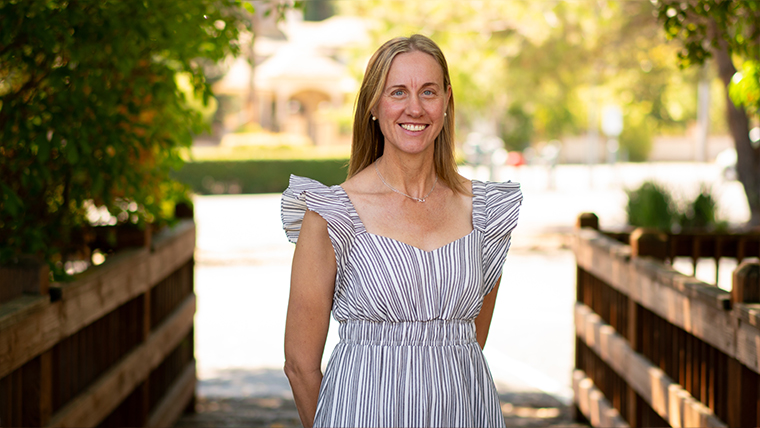
Head of Schools, Los Altos Christian School
Foundations first — and the tools that build on them
Built on paper first
In the elementary years students read, write, spell and work problems by hand. Handwriting, phonics and comprehension are laid down properly before a screen enters the picture.
Innovation Lab
Keyboard and mouse skills, Canva, Scratch coding and 3D printing — taught deliberately, as tools with a purpose.
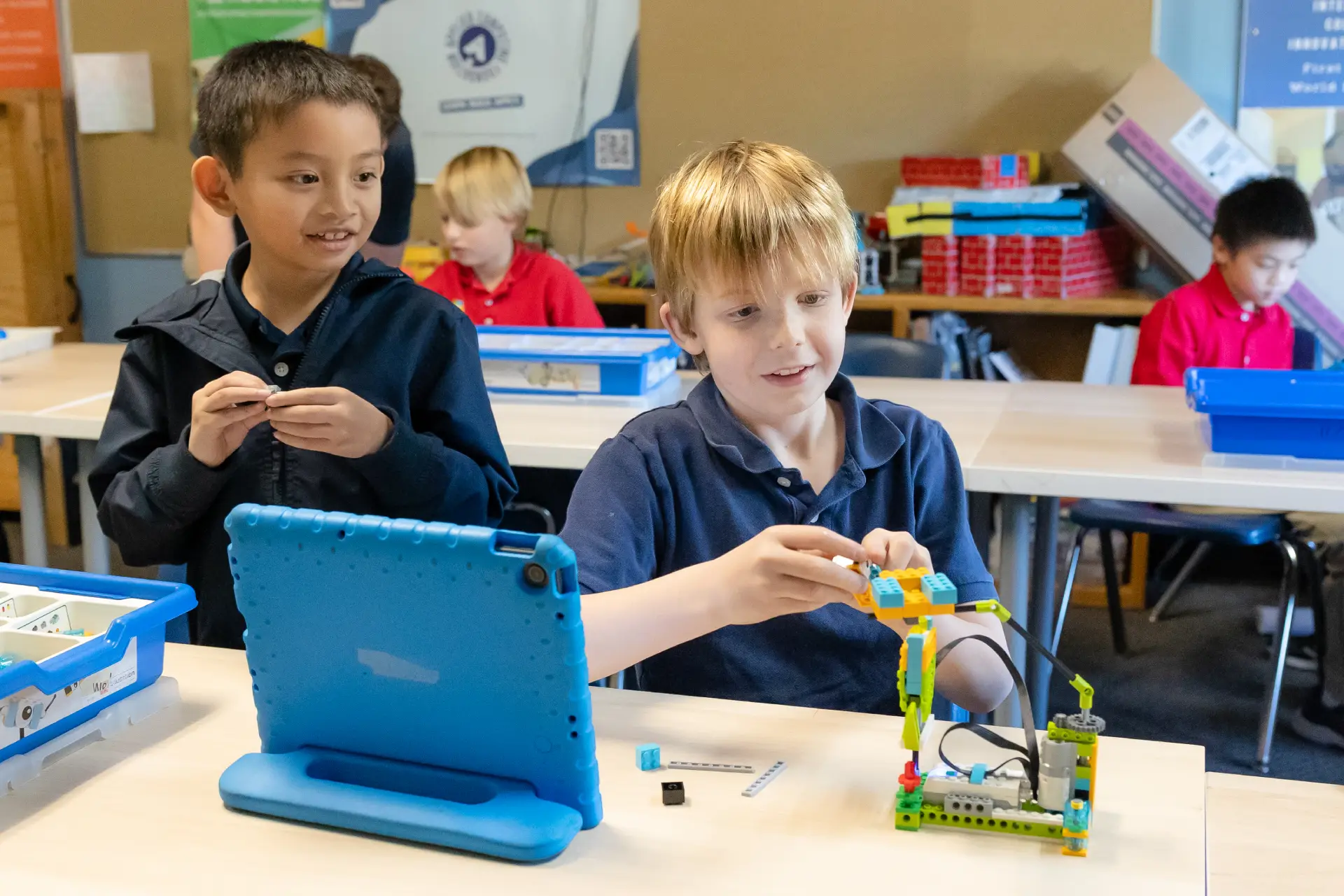
LEGO Robotics
Hands-on engineering and problem-solving in the Innovation Lab, alongside art, music and physical education.

Program highlights
Students learn in a safe, supportive and connected community where strong relationships foster belonging and a love of learning. Our Elementary program meets and exceeds grade-level academic standards while honoring each child’s unique gifts through differentiated instruction that provides both challenge and support. Students are encouraged to think critically, collaborate, communicate clearly, and apply their learning in meaningful, real-world ways.
Christian faith and values are intentionally woven throughout the curriculum, helping students develop strong character, empathy, integrity, and a biblical worldview that shapes both their learning and daily lives.
Extended learning & enrichment
Math acceleration & enrichment
Students who demonstrate strong mathematical readiness may be placed on an accelerated math pathway, beginning as early as TK. Placement is determined through a readiness assessment. LACS also participates in the ACSI-sponsored International Math Competition and MOEMS.
Student leadership
Students in grades 3–5 may apply to serve as Junior Ambassadors, modeling responsibility, kindness and Christ-centered leadership while supporting school events and welcoming new families.
Co-curricular learning
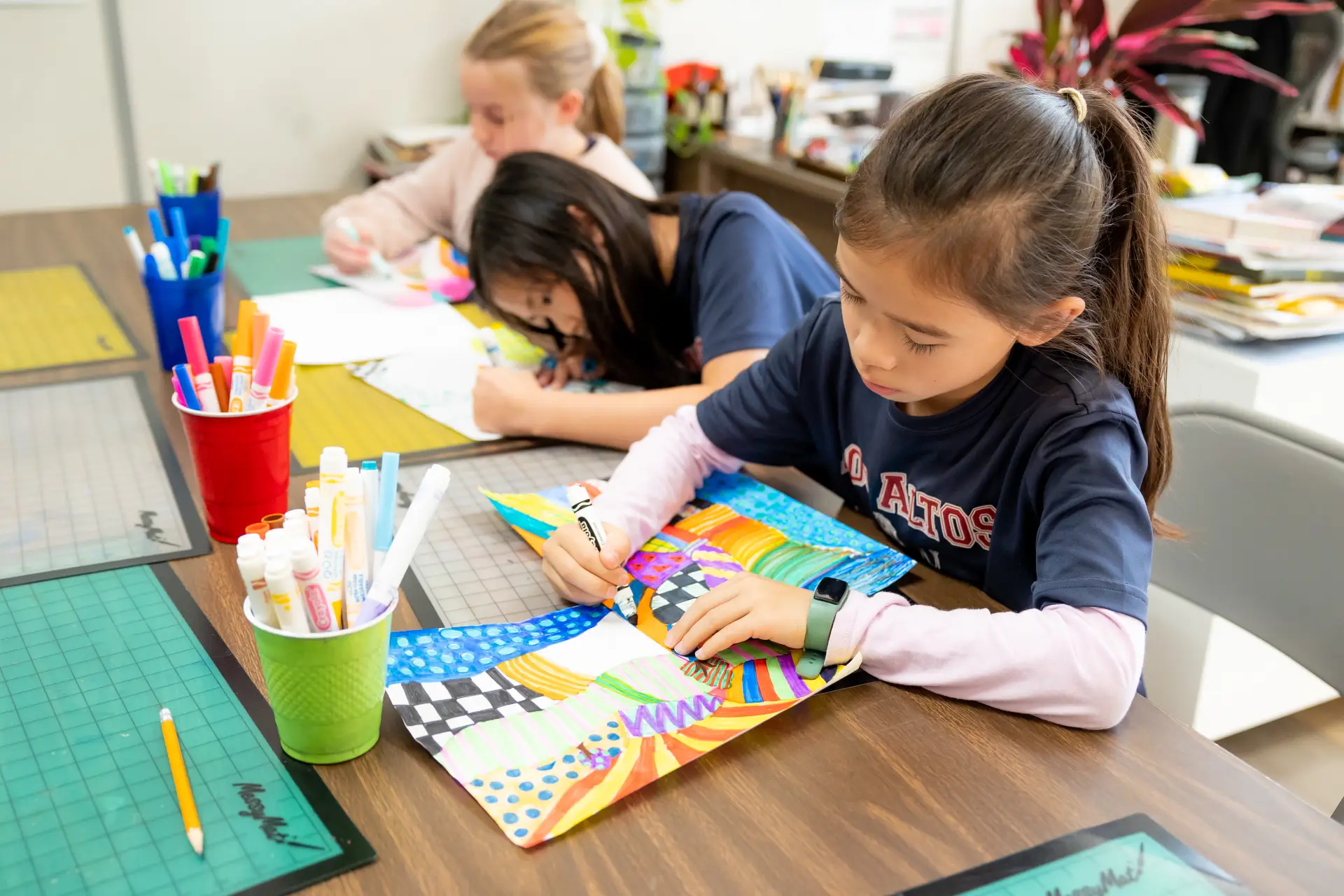
Art, Music, Physical Education and STEAM-based learning, plus buddy activities, Chapel, the Christmas musical, International Day, House Color games and pep rallies.
After-school enrichment & athletics
A sample of what runs in grades 3–5: basketball, volleyball and pickleball, plus Chess Club, Robotics, Creator’s Club, dance, Chinese and Spanish enrichment. Offerings shift each semester.
Field trips
Three to four each year. Recent destinations include Filoli Gardens, the De Anza Planetarium, The Tech Interactive, Mission San Juan Bautista and the Gold Rush overnight in Sacramento.
Faith, every year
The fruit of the Spirit is our standing school memory verse, with a new verse each year alongside it. This year: Isaiah 40:31.
Inside our classrooms


What families say
“
I am thankful for LACS Elementary. The school has not only prepared my children academically but has also nurtured their spiritual and emotional growth. We are grateful for the caring, Christ-centered teachers and staff who have made such a lasting impact on our family.
Dannielle Kim · Current Parent
“
LACS has been such a blessing to our family. We love the caring teachers, strong sense of community, and Christ-centered environment. Our children are thriving, and we’re so thankful to be part of the LACS family.
Jordan Liatsis · Current Parent
Come see it on a school day
Tours run most weekday mornings, while classes are in session. Admissions open October 1.
Questions parents ask
How big are the classes?
Elementary classes run between 14 and 20 students, with a student–teacher ratio of roughly one to fifteen. Teacher turnover is low, which is one of the things families ask about most on a tour.
What does a typical day include?
Every day has a math block and an English language arts block, followed by social studies, science and Bible, and then a variety of co-curricular classes.
How does the Literacy Intervention Program work?
Students in grades 2–5 who need support with reading and spelling are pulled out daily for about fifty minutes, working in small groups of three to six with teachers trained in the Wilson Reading System — an Orton-Gillingham approach aligned with the science of reading. No formal diagnosis is required; placement follows a reading assessment. Full detail is on the Literacy Intervention page.
How much screen time is there in elementary?
Less than most families expect, and deliberately so. The elementary years are built on paper, pencil and textbooks, so reading, writing and spelling are laid down properly. Technology is taught as a tool — keyboard skills, Canva, Scratch coding, 3D printing and LEGO Robotics in the Innovation Lab.
What does tuition cost, and is financial aid available?
Current rates are published on our Tuition page. Tuition assistance is available through our Variable Tuition Program, and the admissions office will walk you through what is included.
What is the admissions timeline?
Admissions open October 1 each year. Most families begin with a visit, then apply. The admissions office will talk you through the steps.
What makes it Christ-centered in practice?
Faith is woven through the curriculum rather than taught as a separate subject. Teachers pray with children when they are struggling, and character formation happens in the classroom rather than in a separate program. Families of all backgrounds are welcome — students do not need to be Christian to enroll.